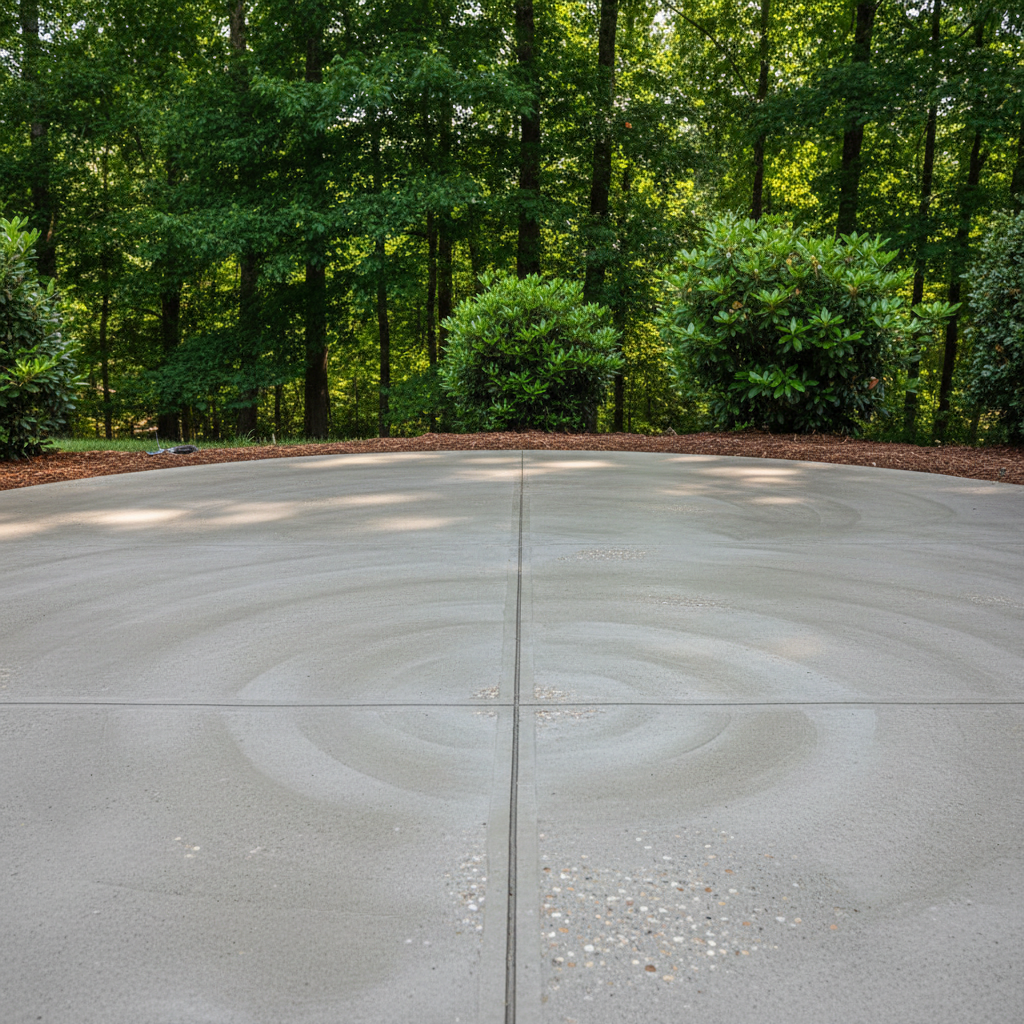
So, you’re thinking about a new concrete project around your place. Maybe it’s a small pad for your grill, or a whole new driveway that’ll make your neighbors on Overbrook Road jealous. I see a lot of folks in Mountain Brook with big ideas, and that’s great! But before you grab a shovel and a bag of Quikrete, let’s talk about what’s realistic for a DIY job and when you really need to bring in a professional like us at Concrete Vision Co.
Before You Even Start Digging
This is where most of the critical thinking happens. You’ve got to plan, and I mean really plan. First, what’s the purpose of this concrete? A simple stepping stone path is a lot different from a foundation for an addition or a heavy-duty parking pad. The load it needs to bear dictates the thickness and reinforcement required. You don’t want cracks showing up a year later because you skimped on the base.
Next, consider your soil. Here in Mountain Brook, especially around areas like Crestline Village, we often deal with that red clay. It’s notorious for expanding and contracting with moisture, which can wreak havoc on concrete if not properly prepared. You’ll need good drainage and a solid, well-compacted sub-base. Don’t skip this step; it’s the backbone of your project.
Permits. Oh, permits. For anything beyond a small, non-structural pad, you’re likely going to need one from the city. Don’t assume; call the city planning department. They’ll tell you what’s required, and trust me, it’s easier to get it right upfront than to deal with fines or tear-outs later.
Finally, call 811 before you dig. Always. It’s free, and it keeps you from hitting gas lines, water pipes, or electrical conduits. You don’t want to be the reason your whole block loses power.
During the Project: DIY vs. Pro
Alright, you’ve planned, you’ve permitted, you’ve called 811. Now for the actual work. Here’s my take on what you can realistically do yourself:
- Small, non-structural pads: Think a 3x3 foot pad for a trash can, or a small AC unit. If it’s just a few bags of concrete, you can mix it in a wheelbarrow.
- Simple repairs: Patching a small crack or resurfacing a tiny area. There are good kits out there for this.
- Decorative elements: Maybe some stepping stones you cast in molds.
These are projects where if it doesn’t turn out perfect, it’s not a disaster. You’re learning, and that’s fine.
But for anything bigger, anything structural, or anything that needs to look good and last a long time, you need a pro. Here’s why:
- Excavation and grading: Getting the ground perfectly level and sloped for drainage is harder than it looks, especially with our hilly terrain.
- Formwork: Building sturdy, perfectly square, and level forms is crucial. If your forms are off, your concrete will be off.
- Mixing and pouring: Concrete sets fast. You need to know how much to order, how to get it where it needs to go quickly, and how to work it before it hardens. A truckload of concrete isn’t something you can just pause and come back to.
- Finishing: This is where the art comes in. Floating, troweling, edging, creating control joints – these all require skill and speed. A bad finish not only looks terrible but can also affect the durability and drainage of your slab.
- Reinforcement: Rebar or wire mesh needs to be placed correctly to prevent cracking.
Trying to DIY a driveway or a large patio often leads to an expensive mess. You’ll spend money on materials, rent equipment, use up your weekends, and then still have to call someone like me to fix it. Save yourself the headache and the backache.
After the Pour: Curing and Care
Once the concrete is down and finished, your job isn’t over. Curing is just as important as the pour itself. Concrete doesn’t just dry; it cures, which is a chemical process that strengthens it. You need to keep it moist for at least 7 days, sometimes longer depending on the mix and the weather. This means covering it with plastic, or using a curing compound. If you let it dry out too fast, it’ll be weaker and more prone to cracking.
Keep heavy traffic off it for at least a week, and ideally, wait 28 days for it to reach its full strength before parking heavy vehicles on it. That new driveway might look ready, but it’s still hardening up underneath.
For ongoing care, sealing your concrete every few years can really extend its life, especially with the freeze-thaw cycles we get here in Alabama. It protects against moisture, stains, and general wear and tear.
Look, I love seeing homeowners take pride in their property. But when it comes to concrete, there’s a big difference between a weekend project and a professional installation. Know your limits, and don’t be afraid to call in the pros when the job demands it. We’re here to make sure your concrete projects look good and last for decades.